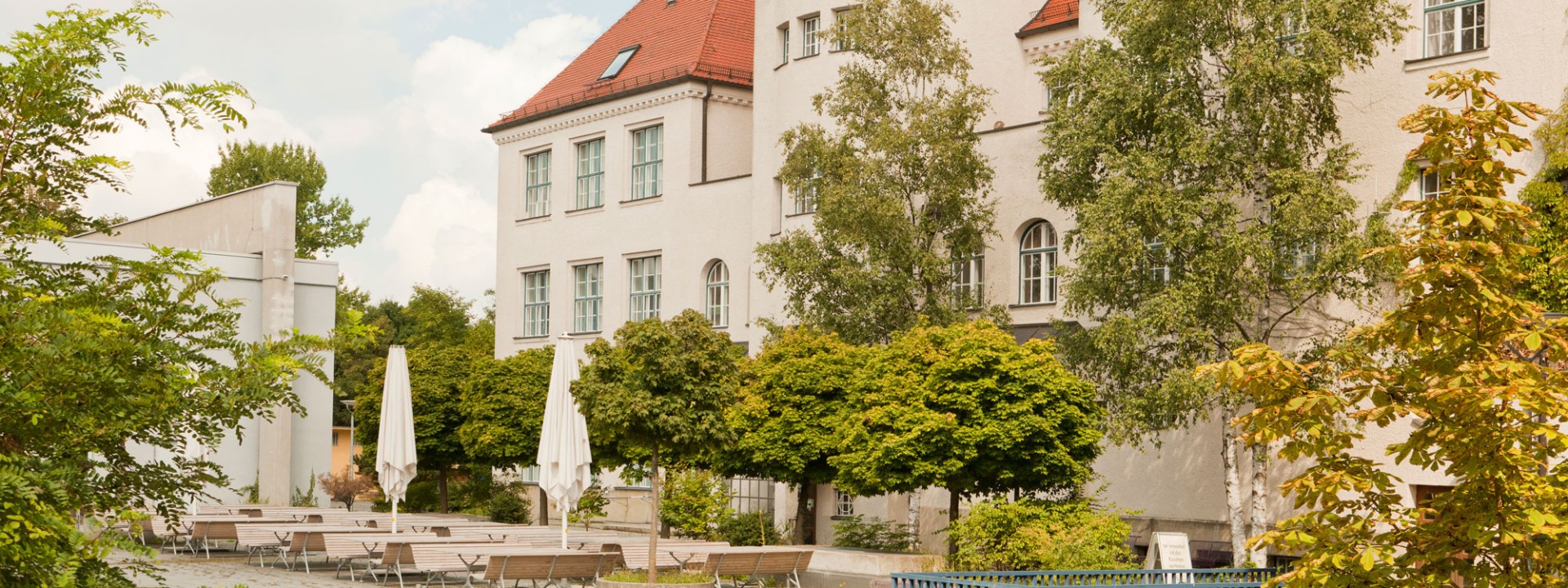
Pasing Campus – Walls steeped in history
The building at Am Stadtpark 20 is the landmark of the Pasing Campus.
Originally built in 1910 as a teacher training college and widely acclaimed, it has had an eventful history.
Unlike the majority of those who completed their education here, the building survived two world wars almost unscathed. This page tells the story of the educational ambitions, the historical upheavals and the people who shaped the Pasing institution in the decades before the arrival of the Departments of Business Administration (now HM Business School) and Applied Social Sciences at Hochschule München.
Pasing
Pasing
Pasing had long been striving for this, and in 1905 the moment finally arrived – Pasing was officially granted town status:
“On behalf of His Majesty the King, His Royal Highness Prince Luitpolt, Regent of the Kingdom, by Royal Decree No. 24558 of 8 November this year, has been pleased to grant, in response to the most humble petition of the rural municipality of Pasing, in the Royal District of Munich, to graciously grant permission for it to be classified, with effect from 1 January 1905, in the category of secondary towns with a municipal constitution.”
Even before Pasing was officially granted town status, the large influx of new residents and the construction of prestigious villa estates had significantly altered the social structure of Pasing. In line with these new needs, the Pasing local authority was keen to ensure that the young town was equipped with the best possible high-quality educational facilities for all age groups.
In addition to an exemplary primary school system, particular emphasis was placed on expanding secondary education provision: a grammar school with a humanities focus, a secondary modern school, the Institute of the English Ladies (which had been in existence since 1862) and a private girls’ lyceum founded in 1907 (later known as the Grotschule) meant that the range of educational provision – relative to the population – surpassed that of all other towns in Bavaria.
1907
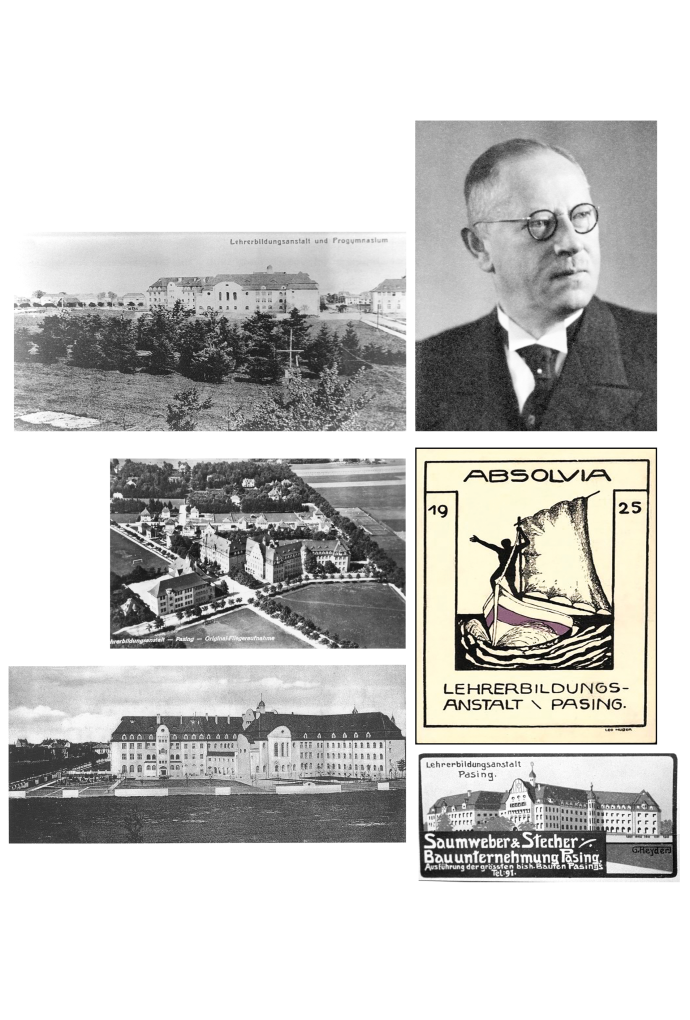
When, in 1907, the Bavarian State Government was seeking a site for a second planned Upper Bavarian teacher training college – as the existing capacity in Freising was no longer sufficient – the Pasing local council, and in particular the newly appointed mayor, Dr. Alois Wunder, seized the opportunity with both hands. They went to great lengths to outshine the numerous other applications: in addition to the obvious locational advantages due to its proximity to Munich, they scored points by offering four and a half days’ worth of free building land and a cash grant of 50,000 marks towards the construction costs.
The government found it difficult to dismiss these arguments, and Pasing was awarded the contract. The building for the teacher training college was designed by the renowned architect and later Professor Hermann Buchert, who at the time was still an assessor at the Munich Regional Building Authority. The construction of this prestigious building project was entrusted to the Pasing-based firm Saumweber & Stecher, which had already built the post office, the cemetery, the Institute of the English Ladies and the parish church of Maria Schutz. Indeed, the project was completed in record time: by 1910, the first state institution had already been built on land in Pasing. The Second Royal Bavarian Teacher Training College was a resounding success and soon surpassed the older Freising college in terms of pupil numbers and reputation. Its first director was Dr. Augustin Stapfer (1860–1915), who had made a name for himself, amongst other things, as the author of a Greek school grammar book.
However, the teacher training college was not a university: the future primary school teachers trained here across six year groups were aged between 14 and 20, and the access requirements were successful completion of the 7th year of primary school. Nevertheless, the graduates played a major part in establishing Pasings’ reputation as a ‘town of schools’.
The person chosen to design the new teacher training college was no stranger to the field. Hermann Anton Karl Buchert (1876–1955) was a renowned German architect, civil servant and university lecturer. Buchert was born in Wegscheid, the son of Karl Buchert, a royal district assessor, and his wife Elisa Michel. He studied architecture and subsequently embarked on a career in the civil service. As a government architect (assessor in public works), he worked as an assistant at the Hochschule München and was then transferred in 1908 to the State Agricultural Building Authority in Munich as a building authority assessor. In 1914, he was appointed full professor of agricultural architecture at the Hochschule München. In 1919, Buchert joined a council of architects and, in the summer,
In 1919, he was elected to the executive committee of the Department of Architecture at the Hochschule München. In 1925, he was appointed an honorary member of the Academy of Fine Arts. In 1929, he was awarded the honorary title of Geheimer Baurat by the Free State of Bavaria. Buchert is regarded as a proponent of a historicist architectural style. Several of the buildings he designed are still in use today, including the former Central Vaccination Centre on Mariahilfplatz in Munich, which now serves as a police station, the Pottenstein rock pool (Upper Franconia) and the hydroelectric power station in Töging am Inn. All these buildings are listed as historic monuments.
Under the headline ‘The new teacher training college in Pasing’, the *Würmtalbote* reported on 3 November 1910 on the new building in great detail and with great enthusiasm:
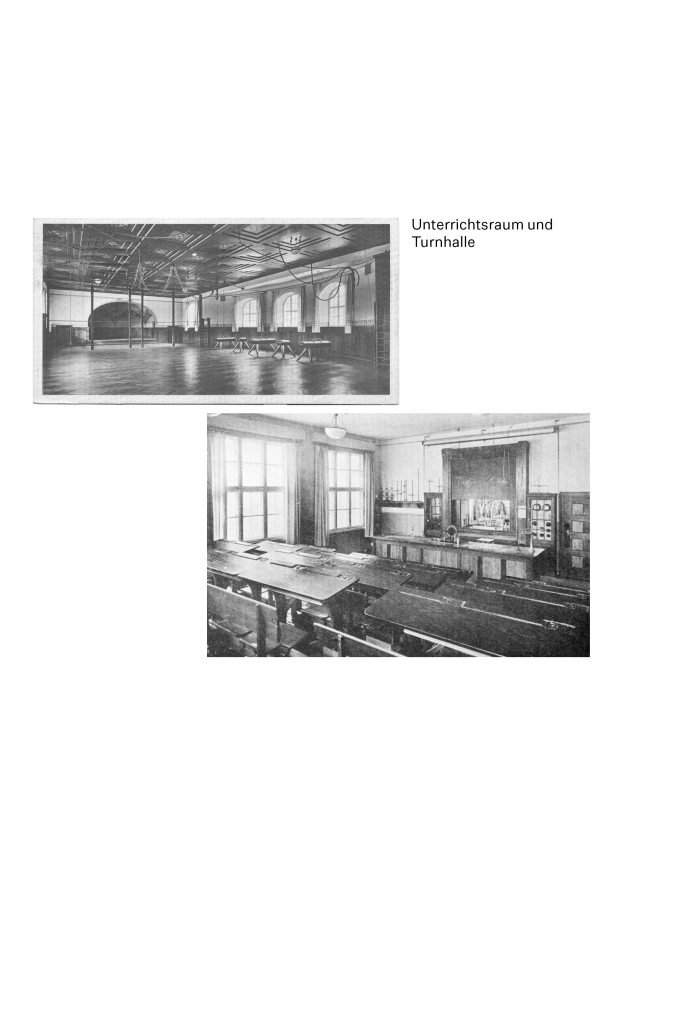
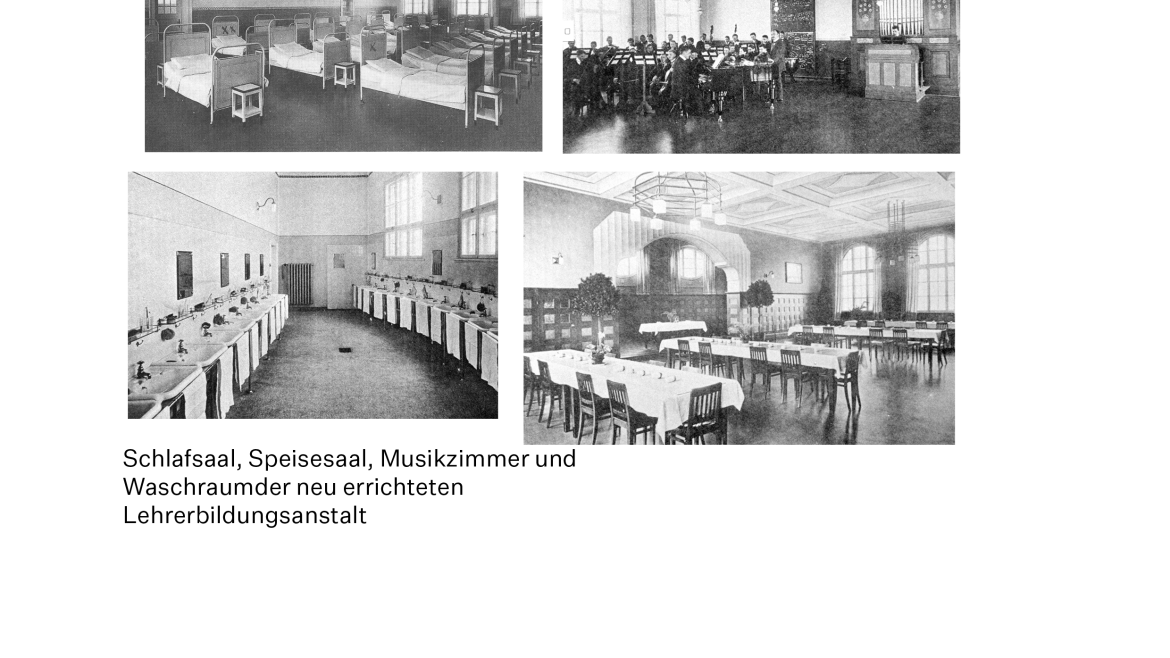
“Even from a distance, the imposing building catches the eye with its white façade and its high, steep-pitched roof adorned with a turret. It is built in a modern bourgeois architectural style and consists of a central wing housing the administrative offices, the headmaster’s and prefects’ rooms, the dining hall, etc., as well as the wing containing the classrooms and the boarding school wing. […] The overall floor plan is irregular; the large building masses are superbly structured; nowhere does one get the impression of heaviness or excessive bulk. […] The building presents a distinctive silhouette from all sides. […] Inside, too, the new institution is a model facility in every respect. The latest technical innovations have been incorporated throughout; everything has been thought through down to the smallest detail. Moreover, the interior décor is thoroughly tasteful and dignified.”
As many of the so-called ‘trainees’ came from outside the area and needed somewhere to live, a boarding house was set up in the attic in 1916, which accommodated around 40 pupils in very cramped quarters.
Relatively soon after it was founded, the teacher training college was dealt a severe blow. Its first director, the dedicated, highly respected and much-loved educator Dr Augustin Stapfer, passed away in the fifth year of his tenure:
“On 15 May 1915, the Royal Teacher Training College suffered a grave loss. At the age of just 55, its first director, Dr Augustin Stapfer, succumbed to cerebral palsy. The fact that death came upon him so suddenly may seem surprising. Yet to those closest to the deceased, it could not have been hidden that his ailing body was increasingly failing to serve his soul, which was so full of vigour and determination. Those who had worked under him since the college’s opening had to acknowledge this with deep regret. One need only recall the difficulties that had to be overcome in the early days. The great building stood there, still unfinished both inside and out, and yet lessons were to begin and be held in the proper manner. With astonishing energy and recognised organisational talent, Dr Stapfer overcame all difficulties.”
1914
However, the First World War marked a far more significant turning point in the still-young history of the teacher training college. The 1914–15 annual report bears witness to the drastic changes as well as to the initial euphoria sparked by the war.
‘After the outbreak of war, the number of pupils who voluntarily rushed to take up arms and sought with great eagerness to be enlisted in the army increased day by day, so that it seemed as though the upper classes were to be left entirely without pupils. Although a large number of them were driven to the front by a sense of duty and enthusiasm, the influence of their parents had held many back, so that the 6th form could be opened and the number of pupils leaving the 5th and 4th forms was not too great. […] A close bond soon developed between the school and the front. The establishment of a ‘war class’, undertaken by the Headmaster, Dr Stapfer, made it possible to send a large number of gifts of love to the front for teachers and pupils. The female pupils of the teacher-training college took a particularly active part in this; from their small, skilful hands, in commendable competition, all manner of useful items emerged, with which they brought joy to our loved ones in the field.”
Annual Report of the Teacher Training College 1914/15
The war also had an impact on the curriculum. Some subjects – French is mentioned specifically – were dropped, whilst new content relating to the war was added:
‘The superhuman feats of our brave men at the front made it a sacred duty for those at home not to lag behind, but to strive for the very best by exerting every ounce of their strength. Strict obedience, moral purity, trust in God, and boundless love for one’s homeland and fatherland ought to be the hallmarks of every young German man. Whenever the opportunity arose, major events took centre stage in lessons. German language assignments centred on these topics; the finest examples of war poetry were highlighted, and patriotic and military songs were given the utmost attention. Letters from fellow pupils, relatives and acquaintances containing interesting accounts of life at war were read aloud, whilst pictures and artefacts from the front were put on display; maps and models, some of which were made by the pupils themselves, provided information on the current state of our armies’ operations. The history of the development of the individual states involved in the war, international treaties, social and economic issues, technical achievements, organisational initiatives in the fields of finance and food supply: in short, everything of significance that the times brought to our people was experienced first-hand by the school.”
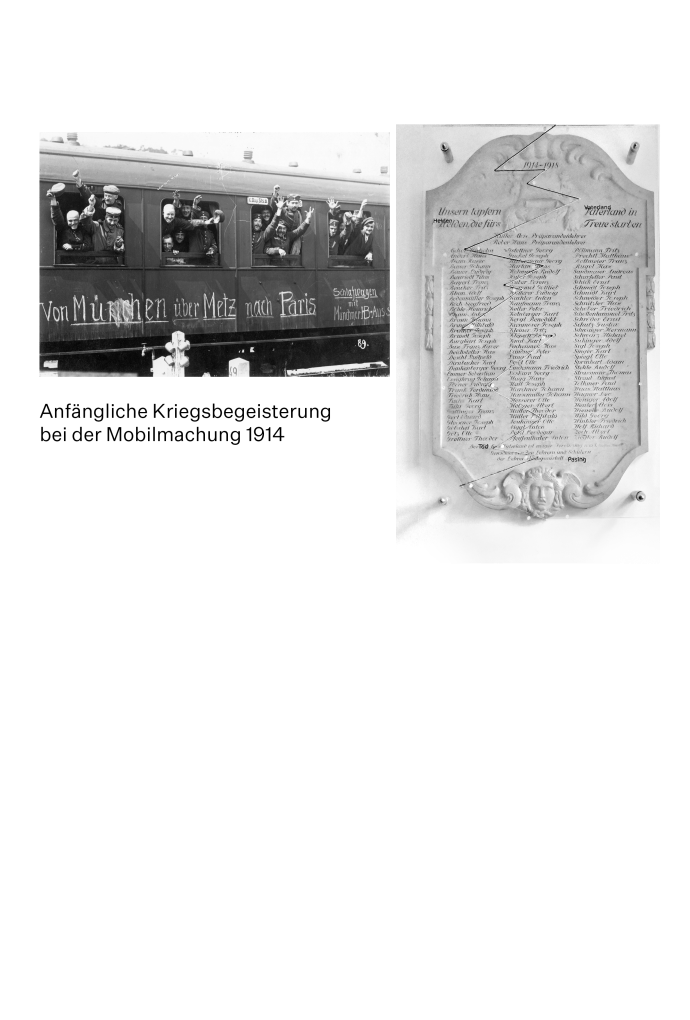
Reality caught up with the teacher training college just as it did with the rest of the country. Of the young men who were completing or had completed their training there, more than half did not return from the front. Most of them had been killed in action in France. The annual reports clearly show how the situation for those left behind also deteriorated year on year.
“This year, too, the Teacher Training College took part in practical war relief efforts. At Christmas, we sent a care parcel to each of the 45 current and former pupils serving at the front. Several pupils took part in three charity concerts organised by the Pasing Orchestra Society, the entire proceeds of which were donated to war relief. Teachers and pupils each donated 60 marks towards care for war invalids and for the bereaved families of fallen soldiers. The gold collection for the Reichsbank raised 3,380 marks. The collection of waste paper and donations to the Reich Book Week also yielded satisfactory results. Seminary students and trainee pupils subscribed 26,000 marks to the fourth war bond issue. Under the direction of the senior seminar teacher, Mr Schott, several pupils organised a small musical performance on 8 July for the wounded soldiers being treated at the Pasing Association Military Hospital.”
Annual Report 1915/16
“At the start of the school year, lessons could only be maintained with great difficulty due to the significant shortages in the teaching staff. From mid-October onwards, however, they proceeded as prescribed in the school regulations. A further disruption was caused by the severe cold and the resulting general coal shortage in February. On the orders of the Royal Ministry of Education, lessons had to be suspended until further notice on 2 February and the boarding school closed. On 22 February, lessons resumed for pupils living in Munich, though initially only on a departmental basis, as the limited supply of coke was only ever sufficient to heat 3–5 classrooms. In order to make up for some of the lost teaching time, the Easter holidays were shortened by five days by ministerial order.”
Annual Report 1916/17
“The Great War has come to an end. Its unfortunate outcome imposes heavy sacrifices on the German people. Regrettably, we must also mourn the loss of young lives in the final year of the war. The following pupils fell on the field of honour: Lindemann, Friedrich; Huber, Joseph; Neuhäuser, Otto; Straßmair, Thomas; Magg, Johann; and Braun, Wilibald.The roll of honour, which precedes the annual report, is dedicated to these brave men. On the night of 7–8 November, the Free State of Bavaria was proclaimed. In the new Free State government, Mr Johannes Hoffmann, a member of the State Parliament, assumed the post of Minister of Education and Culture.”
Annual Report 1918/19
To this day, the commemorative plaque in question serves as a reminder of the 112 fallen students from the Teacher Training College; in 2005, a critical commentary was added to it, criticising the whitewashing and glorification of the many deaths, which can no longer be justified from today’s perspective.
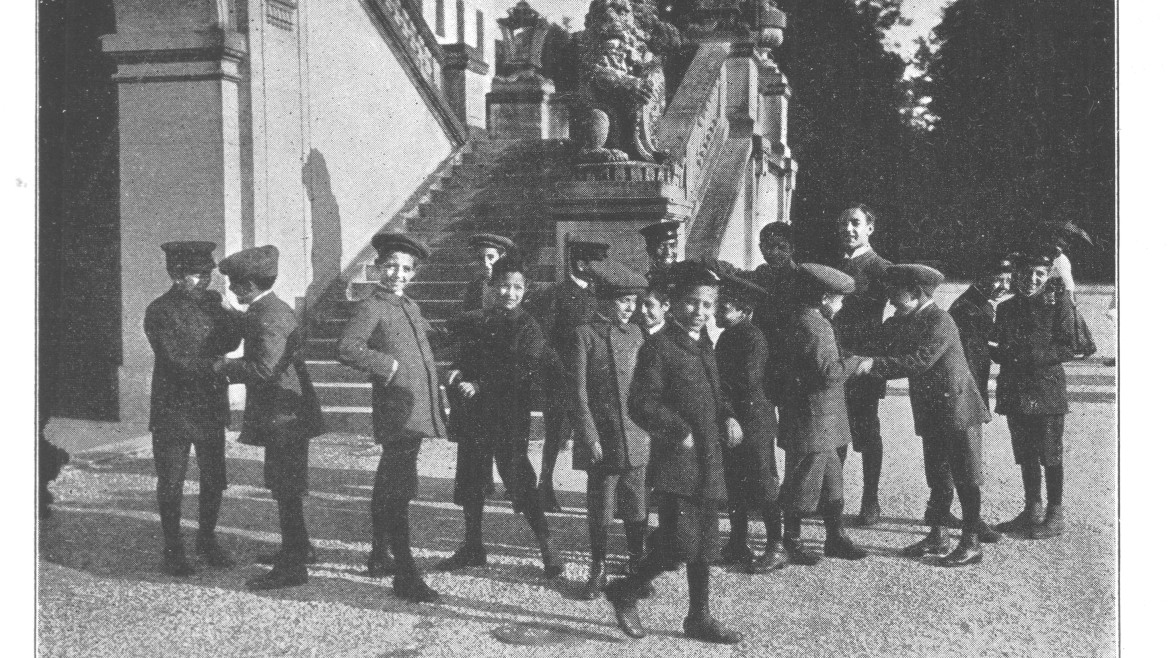
One interesting fact is the high number of Spanish pupils who were trained at the teacher-training college during the First World War. This was the result of an initiative by Princess Maria de la Paz, Infanta of Spain, who had been married to Prince Ludwig Ferdinand since 1883. As the son of Adalbert of Bavaria and Amalia de Borbón, he too had Spanish ancestry. In 1913, Maria de la Paz founded the Pedagogium Español e.V. as an educational and friendship project between Spain and Bavaria. The aim of the association was to support gifted but financially disadvantaged children. They were to attend primary school in Munich and the Pasing Teacher Training College, before returning to Spain as qualified teachers to act as ambassadors of German culture there. The boys were housed in the Seifert Villa in Sendling. Although the Wittelsbach family’s educational initiative survived the First World War, it received very bad press – mainly due to the scandalous lifestyle of the home’s director. This led to his dismissal, and in the spring of 1918, Max Junkert from the Teacher Training College took over the home, though only for a short time: the abolition of the monarchy in November 1918 also marked the end of the Spanish-German educational exchange.
1933
The Nazis take the reins
In 1933, all discussions on education policy during the Weimar Republic came to an abrupt end with the Nazis’ seizure of power. Among the laws enacted in haste was the ‘Law for the Restoration of the Professional Civil Service’, which came into force as early as 7 April of that year. Jews and political opponents were excluded from the civil service, a measure which also hit parts of the teaching staff at the teacher training college with full force. Adolf Lichtinger, a secondary school teacher and SPD city councillor, was dismissed from the civil service in 1933. Josef Vogtmann, also a staunch Social Democrat, was removed from office in 1934. The admission criteria for teacher training now, too, served primarily to further racial ideology and the standardisation of thought:
“When considering applications, priority shall be given to candidates who are members of the National Socialist movement. The next generation of German teachers should be drawn primarily from students who have already proved themselves in the Hitler Youth whilst at school. Applications must be accompanied by:
- an official document certifying German Reich citizenship
- Details of Aryan ancestry (to be substantiated by one’s own birth certificate and the parents’ marriage certificate)
- proof of completion of the compulsory labour service or the student compensation service
- ‘where applicable, evidence of service and good conduct within the various branches of the party.’
The seizure of power is welcomed
As the 1933 annual report for the 1932/33 academic year, written by Dr Georg Rummel, shows, the staff at the teacher training college – or at least the majority of them – were quite taken with the new balance of power:
“The patriotic school ceremony ordered by the Acting Minister of State for Education and Culture to mark the opening of the new Reichstag on 21 March 1933 was inspected at 8.30 am that morning. The school building, the assembly hall and the lectern were decorated with the black, white and red colours, the swastika flag and white and blue. Green foliage enlivened the assembly hall. All the teachers and pupils of the school took part in the ceremony. The ceremonial hymn ‘Flamme empor’ by R. Trunk, sung by the pupils’ choir under the direction of the Head of Studies, Mr Angerer, set a stirring tone to the ceremony, after which the pupils’ orchestra, conducted by Professor Merkl, gave an impressive performance of the first movement of Beethoven’s Eighth Symphony. This was followed by the ceremonial address by the head of the institution, who, after a brief historical overview of past circumstances, paid tribute to the significance of the day and called for active cooperation in the reconstruction of the Reich under the new national government. The collective singing of the ‘Deutschlandlied’ visibly expressed the sentiment of all those present. Following a spontaneous toast to the Reich Chancellor, Adolf Hitler, proposed by one of the institution’s teachers, the ‘Horst Wessel Song’ was sung, whereupon the atmospheric ceremony concluded with an enthusiastic cheer for the Reich President, von Hindenburg.
"On the evening of the same day, the whole school took part in the torchlight procession organised by the town of Pasing, during which the Hitler Youth group that had been formed at the school made its first public appearance."

Renamed the Hans Schemm University of Teacher Education
As Reich Minister of Education, Bernhard Rust ensured, from 1934 onwards, that teacher training outside Prussia was to take place, for the first time, under a uniform Reich-wide system at teacher training colleges. Most teacher training colleges were converted into so-called ‘Aufbauschulen’ (advanced training schools); at the same time, three teacher training colleges based on the general university entrance qualification were established in Bayreuth, Würzburg and Pasing in 1935. The lecturers were generally teachers who held a doctorate and were appointed with the title of professor. As part of the reorganisation following the fatal accident in 1935 involving the Bavarian Minister of Education, the Pasing campus was renamed the ‘Hans Schemm University of Teacher Education’. The founder and head of the new college was – albeit for just one year – Dr Edmund Abb, who had previously headed the Teacher Training College in Würzburg since 1919. He was succeeded as director by Richard Suchenwirth from 1936.
The importance attached to the new teacher-training colleges is evident from the guest list for the opening ceremony on 8 May 1935: those present included the Reich Minister of Education, Bernhard Rust, the Reich Governor, Franz Ritter von Epp, and the Bavarian Minister-President, Siebert. The report in the *Würmtalbote* also reveals the ideological mission these institutions were intended to fulfil:
“The teacher-training college has become a place for moulding German warriors in the National Socialist spirit; the seminar has become a forge for Siegfrieds.”
Building extension
In view of the growing number of students, work soon began on expanding the university by adding a new wing, which was officially opened at the end of 1936. The *Würmtalbote* reported in detail on the advantages of the new premises:
“The large lecture theatre, housed in the new building, has 371 seats and is primarily intended for lectures to the entire student body, for rallies and similar events. In keeping with its purpose, it has been fitted with a blackout system so that slide and film presentations can be held. The lecture theatre on the ground floor, originally intended as a demonstration theatre, has 271 seats; as it has been made available for science teaching, it has been equipped with all the technical aids necessary to ensure lively and varied teaching methods. The Deputy Director, Prof. Dr. Holoubeck, has rendered outstanding service in equipping the lecture theatre and the other rooms intended for science teaching. The laboratories for chemistry and physics are excellently equipped and offer every student the greatest possible opportunity to supplement and expand their science education through experiments.[…]
"The lecture theatres and lecturers’ offices housed in the old building were also subjected to general improvements and adapted to university life as part of the extensive work carried out during the extension."
However, not all of the ambitious plans were realised, as Richard Suchenwirth writes in his review of his six years as director of the Hans Schemm University:
“For a long time afterwards, we could still see the bricklayers at work on the building, and in fact the construction was never actually completed; for, although it had already been approved, the outbreak of war meant that a functional sports hall with a banquet hall above it was never built. The university thus remained an architectural shell. We never had a gymnasium that was even remotely adequate, nor did we ever have the much-desired opportunity to bring all the university’s students together in a fitting venue for festivities and celebrations, or for university-wide events.”
Everyday life at university during the Nazi era
On 8 March 1936, Reich Minister of Education Rust issued ‘Guidelines for Teaching and Studies at the HfL’, which were intended to establish a uniform basis for education under National Socialism by aligning and regulating teacher training accordingly. The academic and practical teacher training now included educational science, character studies and youth studies, genetics and racial theory, folklore, as well as general and specific pedagogy. Particular emphasis was placed on so-called ‘German studies’, a reform movement originally championed by the German Association of Germanists, which was partly absorbed into the National Socialist system. During the holidays, students were required to undertake placements in rural schools and factories.
The students regularly took part in flag-raising ceremonies, social evenings, physical training exercises and commemorative ceremonies. Many were members of the National Socialist youth organisations: the 1936 school report of the Hans-Schemm College lists 222 boys in the Hitler Youth and 185 girls in the BDM. Furthermore, the college had its own student structures in the form of groups belonging to the National Socialist German Students’ League (NSDStB). Student leader Gotthard Teutsch described their formation and activities as follows in his 1942 retrospective:
“Free and bound organically only by the German spirit, with their hearts forever devoted to the cause of the fatherland, a generation has come of age here that strove to fulfil the lofty ideals of student life. […]
The beginnings were arduous and difficult. Everything had to be built up from scratch before the seven comrades’ associations of the NSDStB could be established in 1937 under the leadership of Sepp Miller. The nameplates of the individual comrades’ associations now stood out in a broad array on the large noticeboard: ‘Hans Schemm’, ‘Ritter von Steiner’, ‘Innerhofer’, ‘Mauth’, ‘Franz Holzweber’, ‘Martin Faust’ and the ‘Pohl’ group. – A passionate and sincere zeal inspired the comrades, who, open to all that was good, beautiful and noble, set to work with hearts ablaze.”
Teutsch also has words of praise for the equivalent organisation for female students, the Working Group of National Socialist Female Students (ANSt):
“The women comrades from the ANSt. were not to be outdone in the work of building up the organisation. Community life within the groups there developed more and more harmoniously, as they each served the same ideals in their own way.”
In the beginning, the teacher training college was reserved exclusively for men, but this changed over the years until the gender balance was reversed:
“In the years leading up to the winter semester of 1936/37, the university’s studies for the primary school teacher programme were attended exclusively by male students. One semester later, the first female students appeared. Subsequently, the proportion of female students among the total number of enrolled students increased steadily, until – naturally – they came to far outnumber their male counterparts with the outbreak of the war.”
Various documents suggest that the organisation went to great lengths to support female students at the College of Teacher Training. In 1940, there were no fewer than 41 ANSt groups in the Munich-Upper Bavaria Gau. According to a report from May 1940 by the Department for Women’s and Girls’ Work of the Office for Racial Policy at the Munich-Upper Bavaria Gau leadership, an agreement was reached with the ANSt regarding compulsory racial policy training for students in their first few semesters of study. These training sessions also took place at the Hans Schemm College and involved all 400 female students.
Furthermore, the Association of National Socialist Female Students succeeded in securing its own premises thanks to the personal efforts of the Gau representative in her dealings with the director, Dr Suchenwirth. He granted permission, until further notice, to use a vacant flat on the third floor, which was made more homely with a grant of 1,000 marks from the Gau leadership of the NSDAP, used to pay for painting, curtains and tablecloths. Tables and chairs for the meetings were provided by the Studentenwerk.
1939
Even before it was converted into a teacher-training college, the National Socialists had regarded the customary religious affiliation of teacher-training institutions as a thorn in their side. Despite all efforts to put a stop to this, the Catholic Church still wielded considerable influence at the teacher-training college. Among others, the Association of National Socialist Female Students (ANSt) attempted to curb this influence. The ANSt’s Gau representative, Ruth Bergholtz, lamented:
“Actia Catholica, in particular, has a fruitful sphere of activity here. For instance, in Pasing, a large proportion of the young women live at the Institute of the English Sisters (Catholic), not least because there is a severe shortage of accommodation in Pasing and the female students can live much more cheaply in the Catholic hall of residence. Thus, the first prerequisite for National Socialist educational work in Pasing would be the establishment of a National Socialist hall of residence for female students.”
Alois Kober, a teacher of religious education, appears to have distinguished himself particularly in this regard; a letter from the Bavarian State Ministry of Education and Cultural Affairs dated 1 December 1949 states the following about him:
“The former lecturer Alois Kober, against whom a retrial is currently pending at the Court of Cassation, was arguably the most despicable figure to have operated under Dr. Suchenwirth’s protectorate. In numerous inflammatory lectures to students, he took particular delight in railing against the Papacy, with the aim of undermining the Christian upbringing of young teachers at the very root of their faith. The fact that Kober was engaged in teaching at a teacher-training college had been skilfully orchestrated by the Nazi regime, as the influence of his heretical doctrines was bound to spread far and wide once the indoctrinated young teachers were assigned to school posts.”
On the other hand, Director Suchenwirth, a National Socialist who was otherwise indisputably loyal to the party line, apparently refused to comply with this part of the agenda on a personal level. The Munich Denazification Chamber’s judgment of 14 September 1954, which was required to rule on his original classification as a ‘Level II’ suspect under the Act on the Conclusion of Political Denazification in Bavaria, concluded – partly on the basis of the following mitigating circumstance – that he should correctly be assigned to Group III of those with minor involvement:
“It was also established that the individual in question had refused to resign from the church, as he had been asked to do; in view of his position within the party and in the education sector, this must be recognised as a gesture that is likely to have made a considerable impression on those around him.”
As early as 1939, there was a U-turn in teacher training. Instead of the Abitur, a four-year supplementary course now enabled ‘primary school leavers’ to enter teacher training colleges. In 1940, the duration of study was reduced from four to three semesters, and in 1941 virtually the entire reform of teacher training was reversed. The teacher-training colleges were merged with the advanced training courses to form five-year teacher-training institutions, meaning that teacher training had, in effect, returned to the level it had been at in 1912.
The war took its toll in other ways too. As early as 1942, following an air raid, homeless people were accommodated at the Pasing Teacher Training College. Later, the building served as a makeshift hospital, and from January 1943, rooms were transferred to the Air Defence Command for use as an air-raid warning post. Kurt Singer (1885–2009), a respected German educator who also taught at the Pasing College of Education, recalls the final phase of his student days in 1944–45 as follows:
“Things were pretty turbulent back then. There were lots of air raids, and we had to spend more time, as they put it, on duty than we could spend studying. To make matters worse, we were also made to undergo pre-military training during that period. […] For example, we had to go to the shooting range regularly to learn how to shoot.”
Nevertheless, teaching continued for the nearly 600 students right up until the very end:
“Our lessons actually carried on surprisingly unaffected, just as if nothing had happened. […] The teachers became increasingly silent, although some still believed in the Führer and thought there was still a ‘wonder weapon’ out there somewhere. We had no support from the form tutors and teachers; instead, the former simply took the risk of running away and were suddenly gone.”
This steadfast adherence to National Socialist ideology, despite the situation being de facto hopeless, is documented in a newsletter to former members dated June 1944:
“So much for our comrades. Now I’d like to tell you about last week’s terrorist attacks – four in total – on our beloved Munich: this atrocity eclipsed everything that had gone before. I witnessed it first-hand. My parents were hit hard. Our old LBA is still standing. Our classroom on Frühlingsstraße is a write-off. And if you’re looking for any familiar houses or buildings, they’re a thing of the past, as they say, just like in a fairy tale. In recent weeks, the city has become a battleground of the gravest kind. We back home are convinced that you’ll make those gangsters pay dearly wherever you find them.”
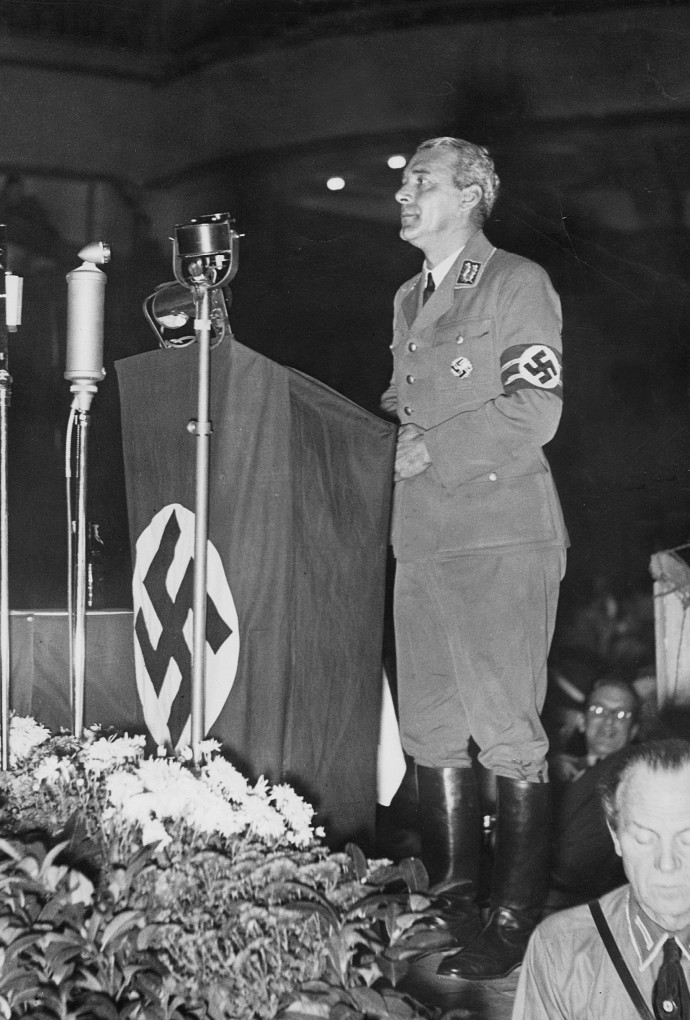
Hans Schemm, after whom the Hans Schemm College of Teacher Training is named, was born in Bayreuth in 1891, the son of a cobbler. From 1905 to 1910, Hans Schemm attended the Präparandenschule, the teacher-training college at the Bayreuth Institute of Teacher Education. From 1910 onwards, he worked as a teacher, initially in various towns in Franconia, and became involved in fascist activities at an early stage. Among other things, he was a member of the ‘Freikorps Bayreuth’, which – although this was after he had left the organisation – took part in the violent suppression of the Munich Soviet Republic.
Schemm’s Nazi career began in 1923 when he joined the NSDAP. In 1924, he became a committee member of the Völkischer Bund Bayreuth; in 1925, he founded the Bayreuth local branch of the NSDAP and, in the same year, the NSDAP’s Upper Franconia Gau. His political views were clearly anti-democratic and anti-Semitic. He is credited with the quote that ‘a Jew should be hanging from every lamppost’. In 1928, Hans Schemm became a member of the Bavarian State Parliament and, alongside this, head of the Franconia district of the ‘National Socialist Society for German Culture’. In 1929, he founded the National Socialist Teachers’ League (NSLB), which he presided over as Reich Governor. In 1932, he resigned from the State Parliament. In 1930, Schemm became a member of the Reichstag and remained so until his death. Schemm was very active in the field of ‘cultural policy’; he founded several National Socialist newspapers and the National Socialist Cultural Publishing House in Bayreuth.
On 16 March 1933, Reich Governor Franz Ritter von Epp appointed Hans Schemm as acting Minister of Culture for Bavaria (von Epp Cabinet). Hitler then appointed him ‘Head of Cultural and Educational Affairs for Bavaria’ on 13 April 1933. Schemm remained Bavarian Minister of Culture under the government of Ludwig Siebert (the Siebert Cabinet) until his accidental death in a plane crash. Hans Schemm had enjoyed extraordinary popularity in Nazi circles. Following his death, a process of glorification began, which included the naming of numerous educational institutions after him.
Richard Suchenwirth (whose real name was Richard Suchanek) was a philologist with a doctorate and a secondary school teacher from Austria. His career within the National Socialist movement began in its very early days and was characterised from the outset by his focus on education policy. As a co-founder of the Austrian NSDAP, he campaigned for the party, particularly amongst the Austrian teaching profession, and at times held the post of leader of the National Socialist faction on the Vienna City School Board. In 1932, he was elected as an NSDAP representative to the Vienna City Council and the Vienna Provincial Parliament.
Following his arrest in December 1933, he managed to flee to Germany in June 1934. Goebbels initially appointed him Managing Director of the Reich Chamber of Literature and later to the Reich Cultural Senate. Richard Suchenwirth was already a recipient of the Golden Party Badge when he was appointed rector of the Hans Schemm College in 1936. He held this post until the dissolution of the teacher-training colleges in 1942. He was also appointed associate professor at the University of Munich, a post he held until 1945.
After three years as a prisoner of war and a lengthy denazification process, during which he was classified as a ‘minor offender’ in a retrial, Richard Suchenwirth returned to civilian life. He taught at a private school in Düsseldorf and worked as a freelance consultant for the Historical Division of the US War Department, researching the history of the air war. He died on 15 June 1965 following a long illness.
1945
After the war, the undamaged building of the teacher training college was requisitioned by the United Nations. The UN had taken over an aid organisation for displaced persons that had been founded as early as 1943 by 44 nations on the initiative of the USA, the Soviet Union, the United Kingdom and China.
The United Nations Relief and Rehabilitation Administration (UNRRA) was responsible for providing for and systematically repatriating displaced persons. In the territory of what would later become the three western occupation zones alone, there were approximately 6.5 to 7 million displaced people, who originated from UN member states. These were primarily former concentration camp prisoners and forced labourers, but also included people who had left their homeland ‘voluntarily’ alongside the retreating German Wehrmacht because they faced severe punishment or acts of revenge in their own country for having collaborated. UNRRA registered and cared for these stranded people in camps and endeavoured, wherever possible, to facilitate their repatriation.
The first UNRRA team arrived in Munich in July 1945. From November onwards, the buildings of the former teacher-training college (now the Karlsgymnasium) and the teacher-training institute in Pasing served as UNRRA headquarters for the American occupation zone. Specifically, UNRRA supported the military administration by managing the displaced persons’ (DP) camps. This involved supplying food, clothing, fuel and medicines from the occupying authorities’ stocks, as well as statistical recording, disease prevention and health programmes. Each camp was managed by a UNRRA team reporting to the local military command; in Munich alone, there were three camp sites. The headquarters in Pasing was headed by John H. Whiting, who had previously served as a Red Cross official for four years.
The fact that both buildings were in use posed major challenges for Pasing in terms of keeping the school running. A memo to the Municipal Senior School Inspector, Dr. Mahir, dated 5 May 1948, vividly describes the difficult situation:
“School crisis: The chaotic state of schools in Pasing places a unique and multifaceted burden on the city, which is responsible for meeting the city’s educational needs:
1. The occupying forces have requisitioned the two school buildings on Bismarckstrasse with the largest capacity. The teacher training college and the primary school are now without premises. The primary school building had 20 classrooms occupied by primary school classes.
2. By the state, which, on the basis of the 1909 Organisation Ordinance and the 1936 agreement, leaves the municipal authority to bear the entire burden of the shortage of school premises alone. It is not a sign of radicalism or a lack of pedagogical understanding to ask why the teacher training college, which has no school building in Pasing, has to be located in Pasing. It ekes out an existence there under the most undignified conditions and takes up much-needed classroom space at the Engelbertstrasse school, space that is essential for the local schools.”
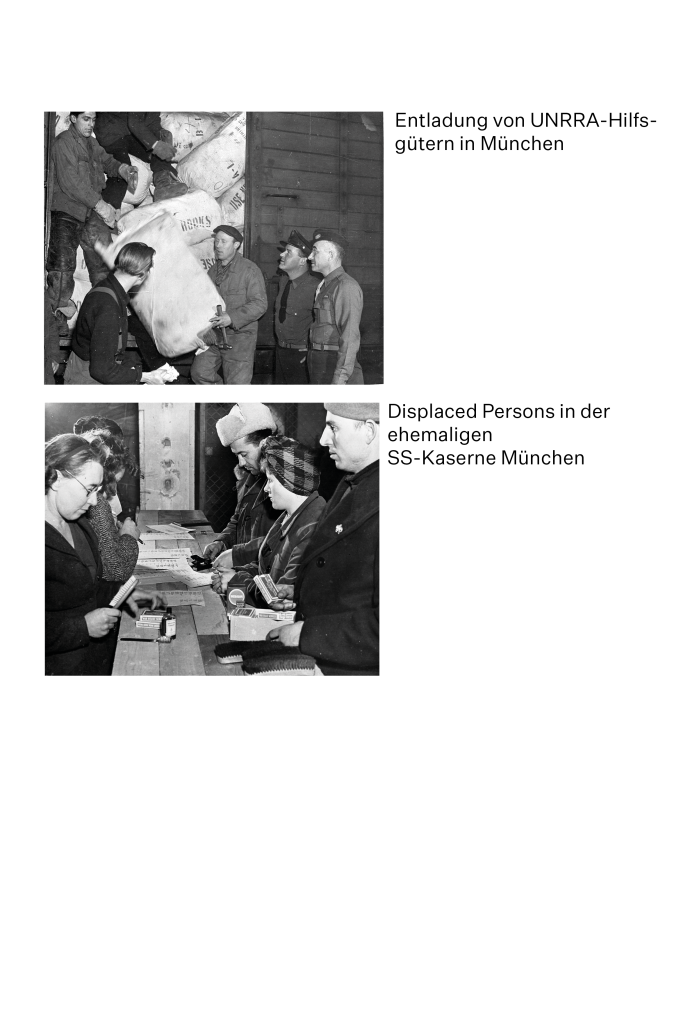
The Deutsches Museum also served as a transit camp for displaced persons. Here, UNRRA established its own university, which officially commenced teaching in February 1946. In the summer of 1946, up to 2,000 students from 30 nations were taught, mainly in English, by around 150 Professors and lecturers in the museum and library rooms as well as in the congress hall. In addition, a course leading to the Abitur was offered to displaced persons who had been unable to complete their schooling due to the war. However, teaching came to a definitive end as early as 31 May 1947, and the students were distributed amongst Bavarian universities. The reason for this was the drastic reduction in UNRRA staff from the end of 1946 onwards; as the goal of repatriating all displaced persons by 1947 could not be fully achieved, UNRRA was dissolved. Its successor, the International Refugee Organisation (IRO, itself the forerunner of today’s UNHCR), did not continue to run the university.
Meanwhile, people were waiting impatiently to be able to resume teaching at the former teacher training college. However, in 1951, the former training school was first cleared and returned to the city. Before it was taken over by UNRRA, it had been occupied by Polish soldiers from May to November. An eyewitness reports significant damage to the building and its contents, which had already occurred during this early phase:
“Shortly after the school building was occupied, and in my presence, some of the equipment (forms, tables and teaching aids) was thrown out of the windows on the various floors and used as firewood, whilst some of it (e.g. teaching aids) was burnt in the school playground. When the headmaster asked the occupiers to at least save files and other documentary evidence, the leader of the occupying unit told him that ‘in Poland the Germans had acted in the same way’.”
Even during the UNRRA period, the building continued to be stripped of its contents, as another witness from the neighbourhood reports:
“It also came to my attention that the panes had been removed from the double-glazed windows so that they could be used in the building opposite, at 20 Am Stadtpark.”
According to the annual reports by Dr Barbara Brückner, who, after the war, served as headmistress of the ‘Teacher Training College and Secondary School (abbreviated)’, the building at Am Stadtpark 20 remained in use until the 1951/1952 academic year. Work continued in various temporary premises, one of which was in the Deutsches Museum, with staff working in two shifts to ensure that teacher training could continue. On 1 October 1952, the staff moved back into the former teacher training college. There, too, the years of occupation had left clear traces. Here is an extract from Dr Brückner’s vivid description of the conditions:
“As regards the previous shortage of space, this is no longer an issue for the teacher-training courses; on 1 October 1952, they were able to leave their temporary accommodation at the Deutsches Museum and move into the Teacher Training College building in Pasing, Stadtpark 20. The building, which had been occupied by Allied forces and displaced persons for seven years, was badly damaged; however, thanks to the efforts of the State Ministry of Education and Cultural Affairs and the teaching staff, suitable premises were soon made available in sufficient numbers. However, the shortage of space at the secondary school, which still lacked its own school building, remained a cause for concern. The need to share all musical instruments and sewing machines led to the relocation of the secondary school’s music and needlework lessons to the building at Am Stadtpark 20. Later, a few other lessons were also moved there.”
Despite all the adversities, the number of graduates is impressive: in 1956, the last graduating year before the teacher-training institutes regained their independence, 145 students qualified as primary school teachers, 168 as specialists in handicrafts and home economics, and 118 as teachers for three-form secondary schools.
To better understand the situation, one must look at how schools and teacher training were organised at the time. There was a strict division between the ‘Volksschule’, which was attended by the vast majority of the population, and the ‘Gymnasium’, which was reserved for a small elite. This division was reflected in teacher training: whilst trainee primary school teachers simply undertook further secondary-level training after completing their primary school qualifications, future grammar school teachers were trained at universities.
This division of the school and teacher training system was regarded by the American occupying forces as profoundly undemocratic, as it did not provide equal educational opportunities for all. Furthermore, the highly authoritarian structures were seen as one of the root causes of the German people’s susceptibility to dictatorship. For this reason, the Americans pressed the Bavarian State Government very strongly for a fundamental reform of the entire system: ‘Teacher training should take place at a level above that of higher education institutions, and it should fall within the remit of the departments of education’ (10 January 1947).
When this demand met with sustained passive resistance from the state government, which insisted that primary school teachers be trained ‘in specialised educational institutions’, the military government issued a decree on 10 June 1947 prescribing universal teacher training: ‘All teacher training shall take place at university level.’ When this decree, too, was met with delaying tactics, the military government finally responded with Directive No. 54, which summarily banned the existing teacher-training colleges for the training of teachers for state primary schools that were accessible without the Abitur. The state government was required to submit concrete plans for their closure within 30 days.
1972
Teacher training becomes university-based. The state government was forced to concede on principle and agreed to transition teacher training to a university-level system over the course of the next few years. However, in addition to a lack of political will, the country was still grappling with the aftermath of the war: the shortage of funding and suitable Human Resources also contributed to the situation where makeshift arrangements and stopgap measures remained in place for a considerable period.
It was not until the initially established teacher training institutes became independent in 1956 that this could be regarded as a logical step towards the academisation of teacher training. This move made the necessary distinction between general education (which had previously been considered sufficient for primary school teachers) and vocational education and training visible to the outside world. The German Gymnasium, which had previously also been based at Pasinger Stadtpark, moved out, whilst the Institute for Teacher Training remained. In 1958, the teacher training institutes were then transformed into colleges of education attached to the state universities. The access requirements were the general university entrance qualification; six semesters of studies were offered, and students were enrolled as full-time students at the universities. The Integration Act of 1972 finally completed the process that the American occupation authorities had set in motion: the colleges of education, as independent bodies within the universities, became fully-fledged subject areas of educational science and integral parts of the universities.
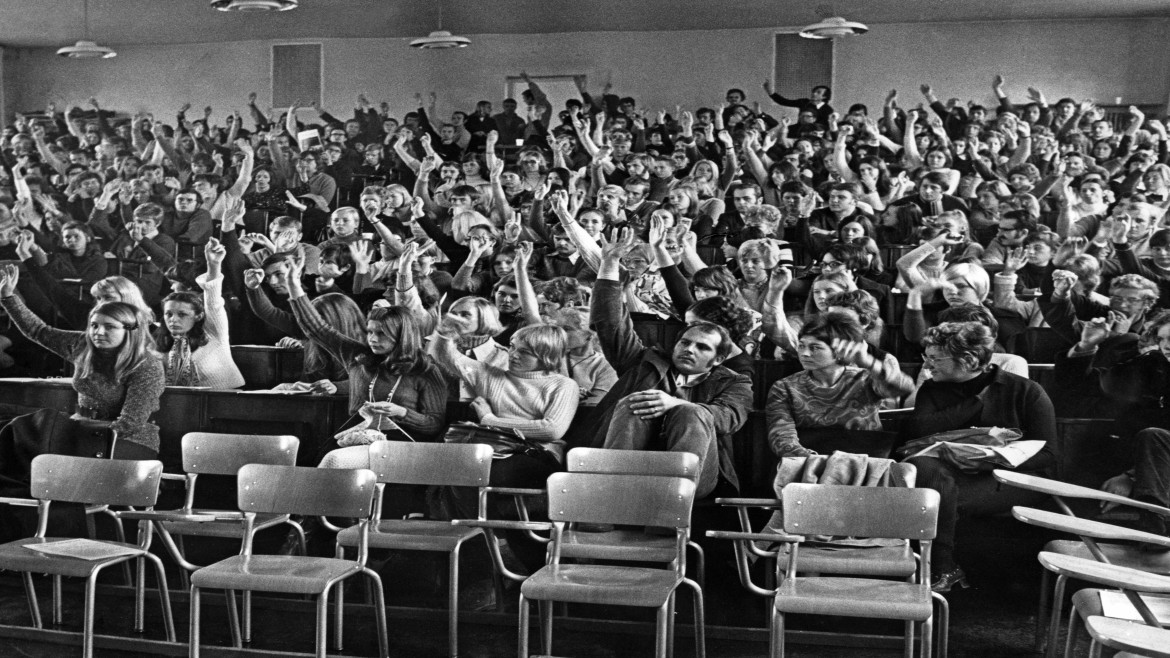
Not much is known about the years the University of Education spent in the Pasing building – they were largely uneventful. However, a constant issue was the shortage of space, which persists to this day, as the existing capacity was unable to keep pace with the ever-increasing student numbers resulting from and following the ‘Education Offensive’. In the 1970s, students vented their frustration at the inadequate provision of teaching spaces and staff for their degree programmes through a number of protests.
One detail that seems rather curious in retrospect is the fact that, although teacher training there took place in a single building, it was nevertheless organised largely along denominational lines. The Catholic majority almost secured an exceptionally prominent chair-holder: Josef Ratzinger, who later became Pope Benedict XVI, was due to become a Professor there. However, he declined the offer, preferring instead to accept the chair in Fundamental Theology at the University of Bonn. Another well-known thorn in the side of the Church is also worth mentioning – Herbert Achternbusch, the late ‘enfant terrible’ of the Upper Bavarian cultural scene, who was repeatedly accused of blasphemy, studied at the University of Education in the early 1960s.
The decision to integrate the Faculty was met with mixed feelings by the members of the University of Education: on the one hand, it brought with it a further enhancement of status and better prospects for teacher training; on the other hand, there was regret at losing a significant degree of independence. Initially, the reorganisation did not involve moving out of the building, as the university did not have suitable premises in the city centre. Plans for a new building for the Department of Education on Leopoldstraße were still in their very early stages.
At the same time, the newly founded Munich University of Applied Sciences was struggling with a severe shortage of space. The 1977 annual report notes that the 7,000 student places set out in the Bavarian Higher Education Master Plan would correspond to a gross floor area of 69,000 m², but in reality the figure was only 29,000 m². This meant that the average occupancy rate stood at 220 per cent. In 1978, the then President of the University of Applied Sciences, Dr Walther Keßler, commented on the situation as follows:
“Since their foundation, the universities of applied sciences have operated under the motto: ‘He who has a why to live for can bear almost any how’ (Nietzsche). This makes it all the more important that their legitimate demands are now met.”
Although the 1977 Master Plan for Higher Education stipulated for the first time that the Social Work and Economics programmes were to be housed in the buildings of the subject area of Education at the University of Munich, it was to be more than 15 years before this became a reality for the latter.
Although the subject area of Business Administration was able to move into its own premises in the newly constructed building at Schachenmeierstraße 35 at the start of the 1981/82 winter semester, these were by no means sufficient. Year on year, rising numbers of first-year students forced the department to resort to ever-new stopgap measures, as it had by then become clear that the necessary refurbishment of the Pasing building could not begin until the end of the decade. Prof. Christoph Ott recalls in the commemorative publication for the outgoing university president, Prof. Walther Keßler:
“In addition to the premises on Luisenstraße and Lothstraße, those on Dachauer Straße (Electrical Engineering), in the former State School of Architecture and at the Retail Trade Association also had to be used for lectures and seminars, meaning that students and Professors sometimes had to commute between five different locations.”
The unacceptable conditions even led to some lecturers ceasing their work in the subject area. And the subject area’s report for the 1988–89 academic year notes:
“For the summer semester, the subject area had to hold the largest number of examinations in its history. Due to capacity constraints, large venues, such as the Löwenbräukeller, had to be hired to accommodate the examinations.”
1994
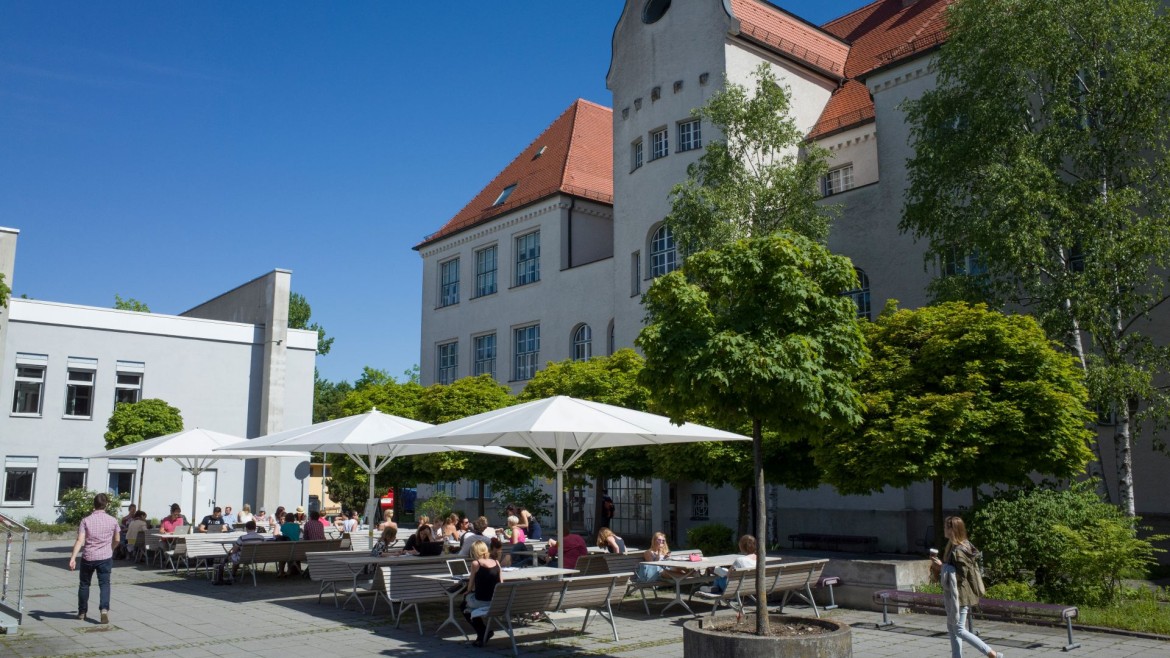
Once the University of Education had been integrated into LMU Munich, further construction and expansion were required to make room for the departments of Social Sciences and Business Administration. In the commemorative volume for Walther Keßler, Prof. Christoph Ott recalls the plans and concerns:
“However, the long-term objective of the President and the subject area was to bring all business administration students together under one roof, a aim that was already reflected in the Free State of Bavaria’s higher education development plan as early as 1978. According to this plan, the business administration programme was to be housed on the premises of the Pasing University of Education, following its integration into LMU. Although considerable concerns were raised from the outset by students and lecturers regarding this location, which was some distance from the city centre, the subject area began teaching in Pasing at the start of the winter semester 1994/1995, after the completion of the necessary refurbishment work had been repeatedly delayed. It thus took exactly 18 years – namely the entire term of office of President Keßler – before the Department of Business Administration could be brought together under one roof. Outsiders cannot imagine the intense efforts, site visits, negotiations and discussions – some of them highly contentious – that were required to bring about this now definitive solution.”
A recollection by the library director, Gertrud Fichtbauer, sheds light on just how many conflicts had to be resolved and how many compromises had to be reached:
“When the space in Pasing was allocated, the two subject areas had divided the pie between them, leaving only a small slice – 400 m² – for the Library. The Social Work branch libraries in Bogenhausen and Aubing already occupied this amount of space at the time, which was unthinkable for the future, when business administration students were also to be accommodated there. Thanks to your [referring to Walther Keßler] support, a solution was found: the conversion of the sports hall, which provided 1,500 m² for the Library.”
Research and text
by Dr Claudia Streit
Acknowledgements
We would like to express our sincere thanks to Thomas Hasselwander (Pasinger Archiv e.V.) and Dipl. Ing. Werner Wasner (Lothstraße Library, Hochschule München) for their dedicated support.
Image sources
- 1, 2, 3, 4, 5, 6, 7, 8, 9, 10, 11, 12, 21, 22, 23, 24, 25: Pasinger Archiv e.V.
- 14, 19, 20: Private photo
- 17: The Karl Vogel Collection
- 13: Federal Archives
- 15: Postcard purchased from an antiquarian bookshop
- 16, 18: Munich City Archives, DE-1992-FS-PK-STB-13451, DE-1992-FS-STB-7615
- 28, 29: SZ Photo
- 26, 27: United Nations Archives
- 30: Hochschule München Press Office